JPMorgan's bitcoin return range and crypto position size
On this page05
Numbers in this piece
§02- Bitcoin base case: 10% annualized over 10 years; bear case -9.7% and bull case 17% per CoinDesk, or -11.2% and 16.6% per Cointelegraph.
- Other assets, per CoinDesk: U.S. bonds 5.6%-6.6%, U.S. large caps 7.5%, small caps 7.7%, gold 5.5%.
- BTC last close: $83,110. Change over 7 days: up 1.8%. Over 30 days: down 4.0%. Over 90 days: up 29.6%.
- 90-day high close: $86,616 on 2026-09-21; price is 4.0% below it. 90-day low close: $62,823 on 2026-08-01; price is 32.3% above it.
- Position in the 90-day range: 85% of the way from low to high.
- 50-day simple average: $81,722; price is above it by 1.7%.

Photo: Kidfly182 / Wikimedia Commons, CC BY 4.0 (cropped)
JPMorgan Asset Management now puts a number on bitcoin: a base case of 10% annualized returns over the next 10 years, with a bear case that is negative. The gap between the bear and bull cases is the figure that matters here, and this article looks at what that spread says about risk per trade and position size.
What JPMorgan published
The bank's asset management arm added bitcoin to its 2027 Long-Term Capital Market Assumptions outlook, an annual report that covers more than 200 assets and is built to help investors plan portfolios, according to Cointelegraph. CoinDesk said it is the first time JPMorgan research has attached a range to bitcoin returns.
The scenario figures differ by outlet. CoinDesk reported a bear case of -9.7% a year and a bull case of 17%. Cointelegraph reported a bull case of 16.6% annualized and a bear case of an 11.2% annualized loss.
The numbers in context
Here are the figures side by side: the bank's long-run assumptions first, then Tradevo's daily-close data for BTC from Bybit, as of 2026-10-21.
- Bitcoin base case: 10% annualized over 10 years; bear case -9.7% and bull case 17% per CoinDesk, or -11.2% and 16.6% per Cointelegraph.
- Other assets, per CoinDesk: U.S. bonds 5.6%-6.6%, U.S. large caps 7.5%, small caps 7.7%, gold 5.5%.
- BTC last close: $83,110. Change over 7 days: up 1.8%. Over 30 days: down 4.0%. Over 90 days: up 29.6%.
- 90-day high close: $86,616 on 2026-09-21; price is 4.0% below it. 90-day low close: $62,823 on 2026-08-01; price is 32.3% above it.
- Position in the 90-day range: 85% of the way from low to high.
- 50-day simple average: $81,722; price is above it by 1.7%.
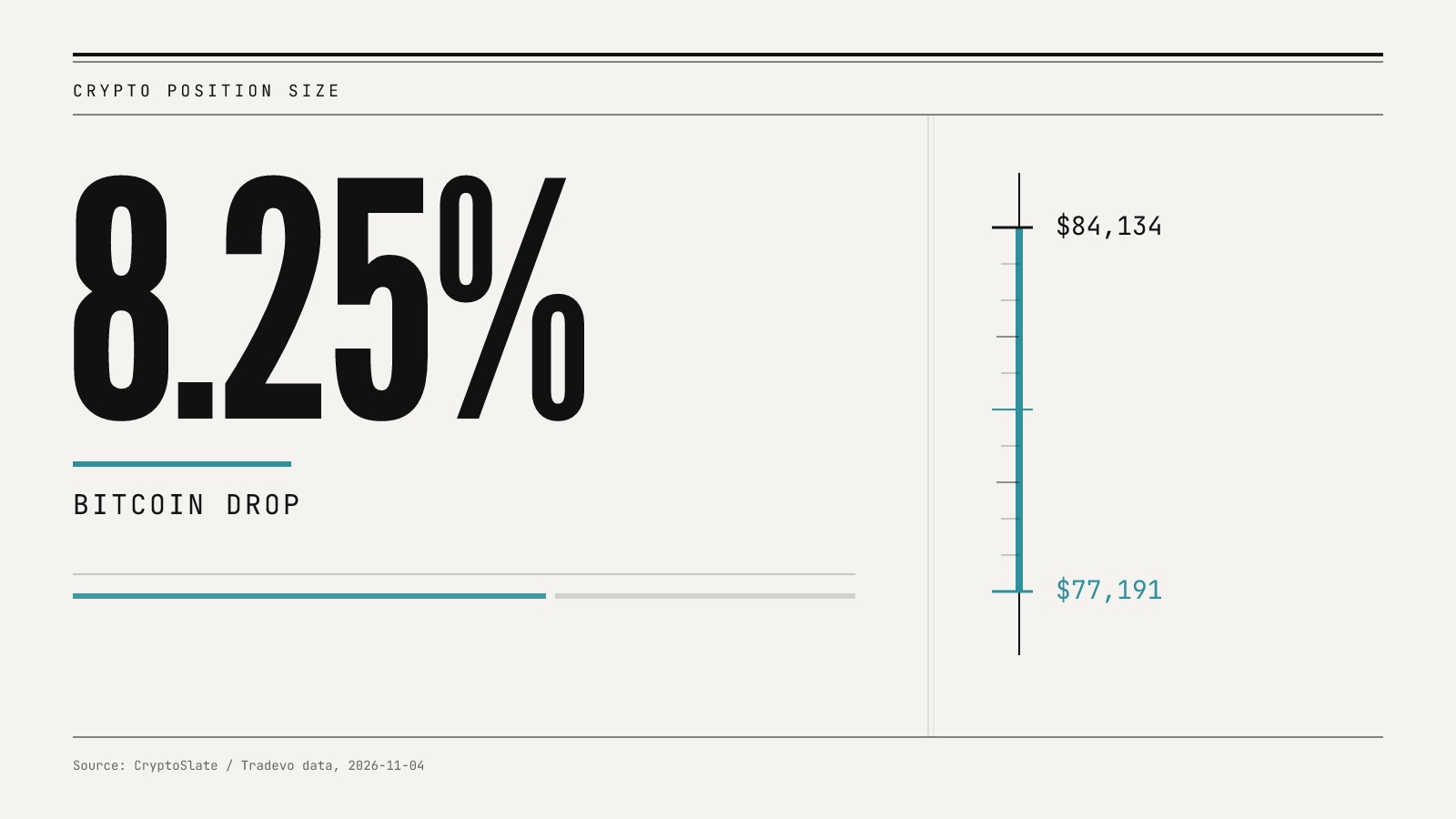
The contrast is the point. A 10-year annual return assumption moves in single digits per year. Bitcoin's own 90-day range ran from $62,823 to $86,616 in daily closes. A long-run average says little about the path between entry and exit.
Why JPMorgan still keeps bitcoin at arm's length
The report said volatility and shifting correlation with other asset classes still stand in the way of broad use in portfolios. JPMorgan said it currently makes no case for bitcoin as a diversifier. In the words of the report, as quoted by Cointelegraph: "We see Bitcoin as a speculative asset and a hedge against monetary easing."
According to Bitcoin Magazine, the report described bitcoin as mostly behaving like a high beta risk asset that follows global money supply growth. Beta here means how strongly an asset moves relative to a broader market: high beta means larger swings in both directions. The report noted that volatility has eased, but said bitcoin's role could change only if volatility keeps falling and correlations settle.
CoinDesk added that the two authors, Sheena Shah (a portfolio manager) and Dennis Cristallo, who leads digital asset strategy, said unstable correlations make bitcoin hard to model and that its fundamentals are not cash flows.
Crypto position size: what a wide range of outcomes means
Position size in crypto is the amount you hold in one trade, set so that a loss at your stop equals the fixed share of the account you accept losing. To calculate it, divide the cash you are willing to risk by the distance from entry to stop. The forecast does not enter the formula.
That is the practical lesson of a band running from a negative bear case to a bull case in the high teens. When the range of plausible outcomes is wide, the stop usually needs more room, and a wider stop means a smaller position for the same cash risk. Size follows the distance to the stop, not conviction in a base case.
Correlation matters too. If bitcoin trades like a high beta risk asset, a BTC position and a stock-heavy book can lose together on the same day. Counting them as separate risks can understate the total risk on the account.
Other views on the same asset
Bitwise CIO Matt Hougan welcomed the inclusion on X, Cointelegraph reported. Bitwise in August 2025 had published a far higher base-case annualized return of 28.3%. CoinDesk noted that JPMorgan chief Jamie Dimon, a longtime skeptic, labeled bitcoin a fraud in 2017.
Sources
- CoinDesk · October 20, 2026
- Cointelegraph · October 20, 2026
- Bitcoin Magazine · October 20, 2026
Written with AI assistance from the reports named above. Figures, quotes and sources are checked automatically before publishing.
For education only, not financial advice. Trading with leverage or futures can lose more than your margin. All examples are illustrative.
Get the next guide in your inbox
One practical email a week. Free, unsubscribe anytime.
Or follow Tradevo on TelegramMarket now
Latest news