Setting stops with ATR: room for the trade, fixed risk
A stop that sits inside normal price noise gets hit by noise. Average True Range (ATR) measures how far a market typically moves in one candle, so you can place the stop outside that noise and let position sizing keep the loss the same.
What ATR measures
True range is the largest of three distances: the candle's high minus its low, the high minus the previous close, and the previous close minus the low. The last two catch gaps. ATR is the average of true range, usually over 14 candles, smoothed the same way as RSI.
ATR is in price units, not percent. A daily ATR of 2,100 on BTC means a typical day covers about 2,100 dollars from high to low. It says nothing about direction.
Placing the stop
A common approach is to put the stop a multiple of ATR beyond the level you are trading: for a long, 1.5 to 3 times ATR below the support zone. The multiple depends on the timeframe and on how much noise you are willing to sit through. There is no correct number.
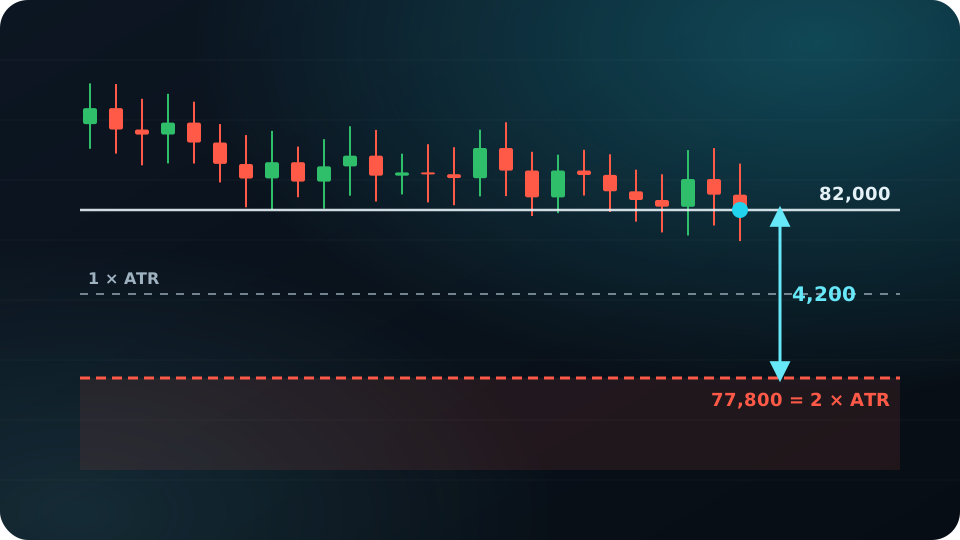
Illustrative example: you buy BTC at 82,000 and the daily ATR is 2,100. A stop 2 × ATR away sits at 82,000 − 4,200 = 77,800, about 5.1% below entry.
Wider stop, smaller position
A wide stop does not have to mean a big loss. Keep the risk at 1% of a 10,000 USDT account and size the trade from the stop distance.
- Risk: 10,000 × 1% = 100 USDT
- Stop distance: 82,000 − 77,800 = 4,200
- Position size: 100 ÷ 4,200 = 0.0238 BTC, worth about 1,952 USDT
With a tight stop of 0.5 × ATR, just 1,050 away, the size would be 0.0952 BTC, four times larger for the same 100 USDT risk, and an ordinary day's movement could easily reach it. The position size calculator on the home page does this arithmetic for you.
When volatility changes
- ATR expands and contracts. Recalculate it when you plan each trade; last month's value may be far off.
- Do not pull the stop closer because ATR fell after you entered. Decide the exit rules before the trade.
- Trailing stops: some traders trail the stop 2–3 × ATR below the highest close. It keeps winners open in trends and gives back part of the gain at the end.
For education only, not financial advice. Trading with leverage or futures can lose more than your margin. All examples are illustrative.
Get the next guide in your inbox
One practical email a week. Free, unsubscribe anytime.
Or follow Tradevo on TelegramMarket now
Latest news