Preferred Dividends and Crypto Position Size
이 페이지의 내용04
이 글의 숫자
§02- BTC last close: $79,517, down 2.9% over 7 days and down 5.8% over 30 days.
- BTC longer-term trend: up 24.3% over 90 days, sitting 70% of the way from the 90-day low to the 90-day high.
- Range benchmarks: the 90-day high is $86,616 (on 2026-09-21, price is below it by 8.2%); the 90-day low is $62,823 (on 2026-08-01, price is above it by 26.6%).
- Moving average: the 50-day simple average is $81,836, and the price is below it by 2.8%.
- Corporate capital split: Strategy allocated $193 million to buy back STRC shares while purchasing 267 bitcoin in a recent weekly disclosure.
- Repurchase ceiling: Strategy raised its authorized preferred-stock share repurchase ceiling to $3 billion after STRC slipped into the $70 range during late June before recovering near $99.40.
- +1 → §02

Photo: Yair Haklai / Wikimedia Commons, CC BY-SA 4.0 (cropped, black and white)
Treasury companies have acquired roughly 136,000 bitcoin using perpetual preferred stock over 20 months, according to CoinDesk. As dividend costs accumulate and share buybacks take capital, spot demand dynamics shift, requiring traders to evaluate crypto position size against structural balance sheet pressures.
Corporate preferred debt meets bitcoin treasury purchases
Corporate bitcoin accumulation increasingly relies on fixed-income instruments. According to CoinDesk, companies including Strategy and Strive have funded acquisitions of roughly 136,000 bitcoin over 20 months through perpetual preferred stock offerings. This total accounts for over 0.5% of the cryptocurrency total supply limit.
Fidelity estimates the bitcoin-linked preferred stock market at approximately $12 billion, set against a global fixed-income universe of $150 trillion. Strategy preferred class STRC generated $7.5 billion in funding through late July 2026. However, STRC pays a variable dividend near 12%, introducing ongoing cash obligations that compete directly with spot bitcoin accumulation.
The numbers in context
Treasury balance sheets now show capital moving toward dividend payouts and share stabilization rather than pure accumulation, while spot market indicators reflect recent consolidation:
- BTC last close: $79,517, down 2.9% over 7 days and down 5.8% over 30 days.
- BTC longer-term trend: up 24.3% over 90 days, sitting 70% of the way from the 90-day low to the 90-day high.
- Range benchmarks: the 90-day high is $86,616 (on 2026-09-21, price is below it by 8.2%); the 90-day low is $62,823 (on 2026-08-01, price is above it by 26.6%).
- Moving average: the 50-day simple average is $81,836, and the price is below it by 2.8%.
- Corporate capital split: Strategy allocated $193 million to buy back STRC shares while purchasing 267 bitcoin in a recent weekly disclosure.
- Repurchase ceiling: Strategy raised its authorized preferred-stock share repurchase ceiling to $3 billion after STRC slipped into the $70 range during late June before recovering near $99.40.
- Institutional scale: Spot bitcoin exchange-traded funds in the United States hold roughly $106 billion in assets following $57 billion of cumulative net inflows.
Crypto position size when corporate buying slows
What is crypto position size when treasury demand shifts from buying to servicing debt? In quantitative trade planning, crypto position size defines the exact dollar value or contract volume allocated to a trade based on risk per trade and stop distance. When corporate buyers redirect capital from spot accumulation to debt defense, traders must adjust size rather than assume continuous programmatic bidding.
CoinDesk reported that Strategy has previously liquidated portions of its bitcoin reserves to meet recurring dollar preferred dividend obligations. When a major treasury buyer shifts $193 million into preferred stock buybacks and secures only 267 bitcoin in a week, incremental corporate demand softens. With bitcoin closing at $79,517—trading below its 50-day simple average of $81,836 by 2.8%—traders who rely on corporate balance sheet expansions face higher volatility risks.
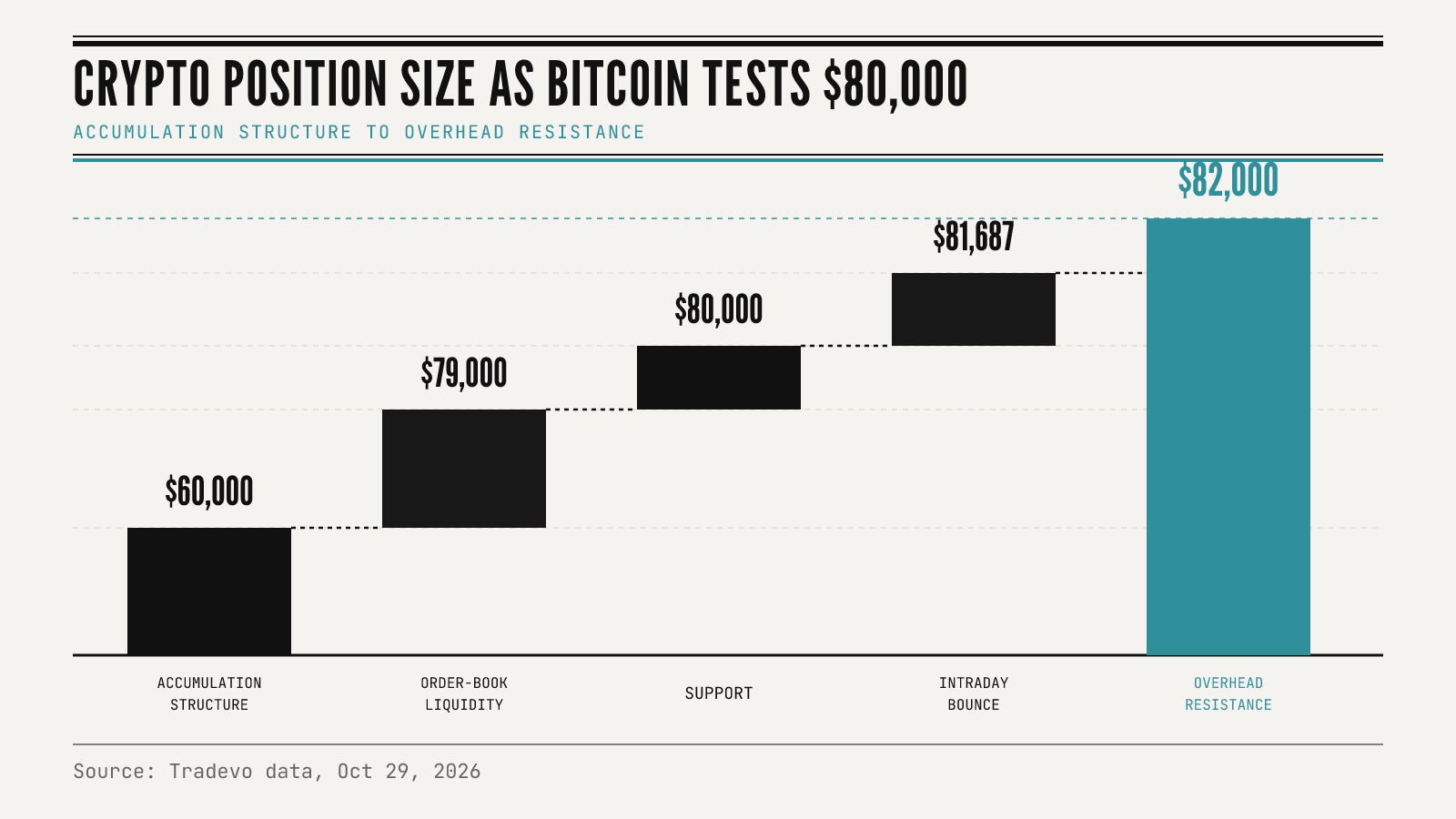
A disciplined execution model dictates that position size follows the distance to the stop, not conviction about corporate treasury announcements. If a trader caps portfolio risk at 1% on a trade entered at $79,517 with an invalidation stop below the 90-day low of $62,823, the wide gap to that invalidation level mandates a smaller position size. Traders using tighter setups just under the 50-day average must still size strictly from the stop distance, accounting for potential selling when corporate dividend deadlines arrive.
Preferred liabilities and market parameters to track
The $12 billion bitcoin-linked preferred market offers room for expansion against the $150 trillion fixed-income universe. Yet preferred stock with a variable dividend near 12% creates structural drag. Every dollar absorbed by dividend payments or the $3 billion repurchase ceiling represents capital withheld from spot order books.
Traders should monitor weekly corporate treasury filings for the split between preferred buybacks and spot purchases. A continued bias toward capital repurchases confirms that corporate cash flow must defend preferred equity, reinforcing the need to calculate position size strictly from invalidation levels.
출처
- CoinDesk · 2026년 10월 24일
위에 적힌 보도를 바탕으로 AI의 도움을 받아 작성했습니다. 수치, 인용, 출처는 게시 전에 자동으로 확인합니다.
교육 목적의 정보이며 투자 조언이 아닙니다. 레버리지나 선물 거래에서는 증거금보다 큰 손실이 날 수 있습니다. 모든 예시는 설명을 위한 가상의 수치입니다.
현재 시장
최신 뉴스